

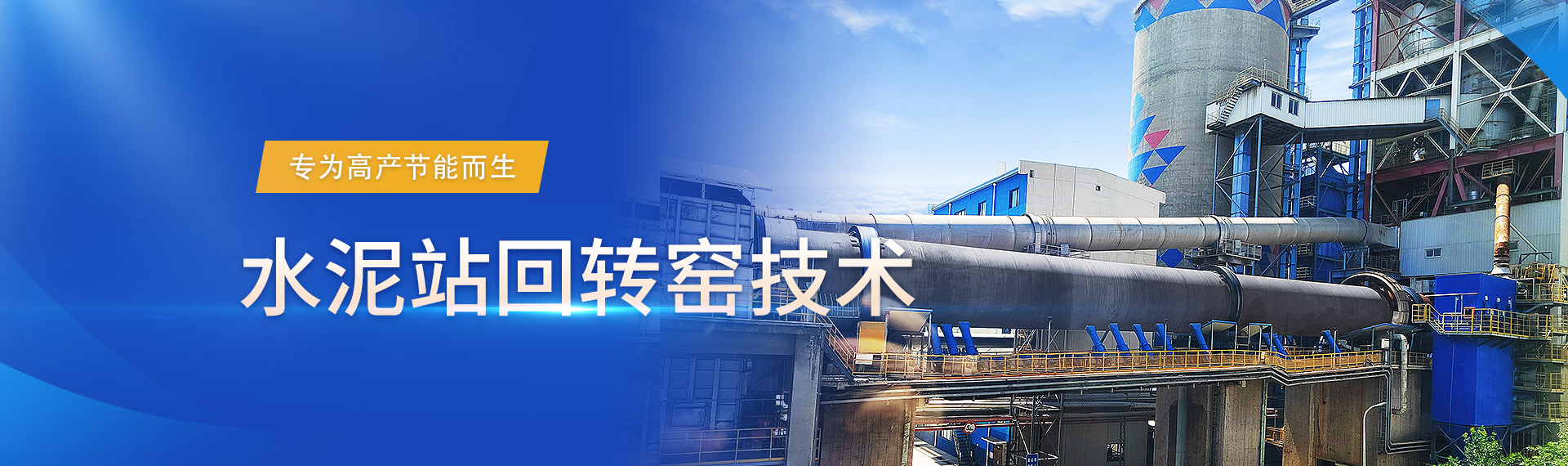
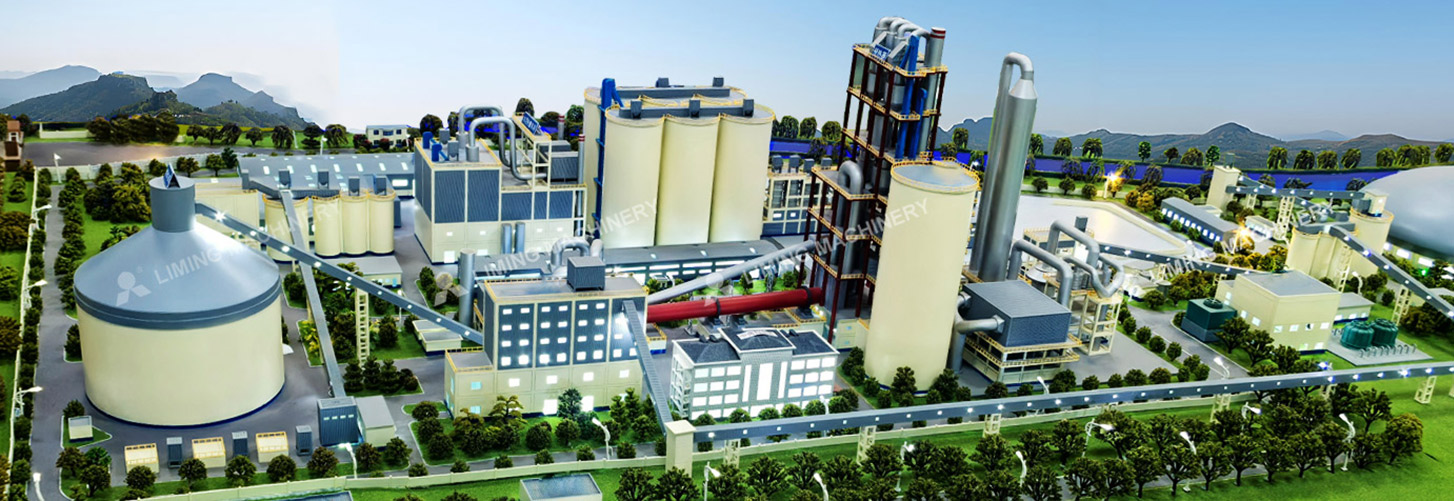
The clinker calcining system serves as the "heart" of a modern cement plant. It is an integrated
high-temperature process system that converts uniformly
proportioned raw meal powder into cement clinker. Modern systems are centered on suspension
preheating, precalcination, and high-efficiency cooling
technologies.
The standard configuration of the clinker calcining system has a daily production capacity of
700-2500 tons, while smaller production lines have a capacity
of200-500 tons per day.
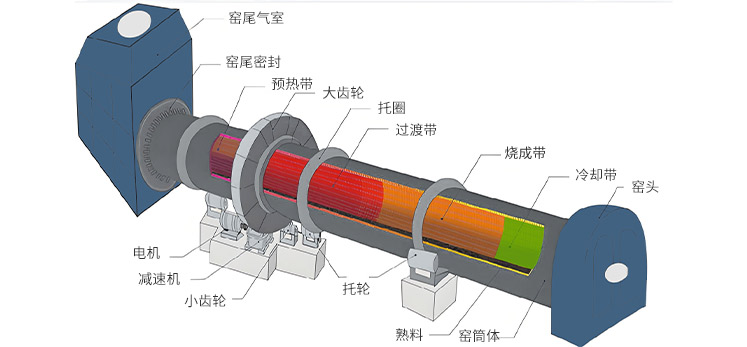
The clinker calcination system employs a low-pressure-loss single-series five-stage cyclone preheater and a new dry process configuration system consisting of a preheater, rotary kiln, and grate cooler. The calcium carbonate decomposition rate of the feed material can reach 90%.The rotary kiln uses a two-stage support short kiln, effectively reducing equipment costs by 15-25%.
Ⅰ.The preheater uses tertiary air drawn directly from the kiln head hood.
Ⅱ.Clinker cooling utilizes a controllable airflow grate cooler. The clinker temperature entering the cooler is 1371℃, and the temperature exiting the cooler is 65℃ + ambient temperature. The thermal efficiency of the cooler system is approximately 70%. A clinker crusher is located at the cooler outlet, and the clinker exiting the crusher is conveyed to the clinker storage silo via a chain bucket conveyor. A portion of the exhaust gas from the grate cooler is used as a heat source for drying the coal mill, while the majority is purified by an electrostatic precipitator before being released into the atmosphere, with a dust emission concentration ≤30mg/Nm3.
Ⅲ.The clinker is stored in a prototype cone-top tent-style silo, with a storage capacity of 5-10 days. After being unloaded from the silo bottom by the unloading device, the clinker is conveyed by a belt conveyor to the clinker batching bins at the cement batching plant.
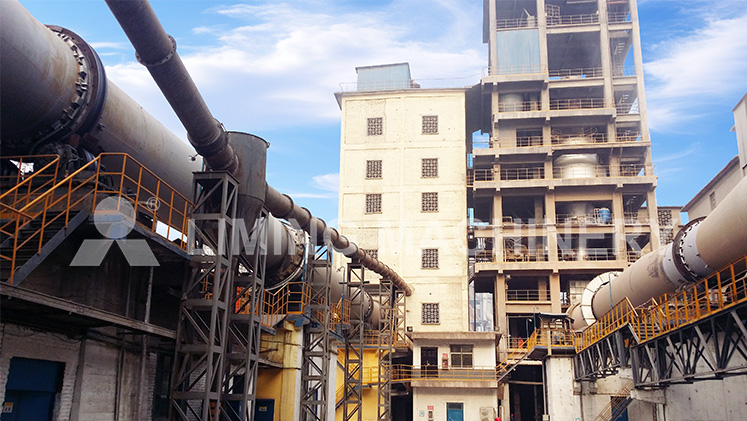
Application of Calcination in Practical Cases
Material:Silicate
Output size:3400cm²/g Capacity:3000 t/d
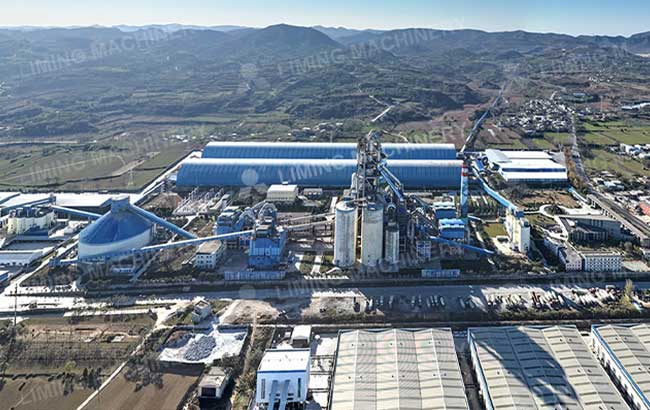
Material:Silicate
Output size:3200~3400cm2/g Capacity:2500 t/d
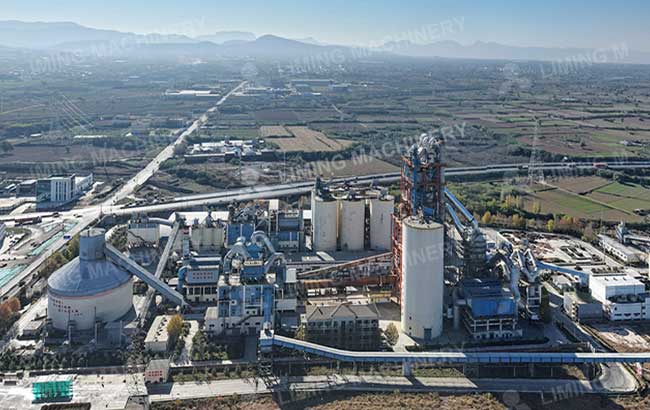
Material:Silicate
Output size:340m²/kg Capacity:1000 tpd
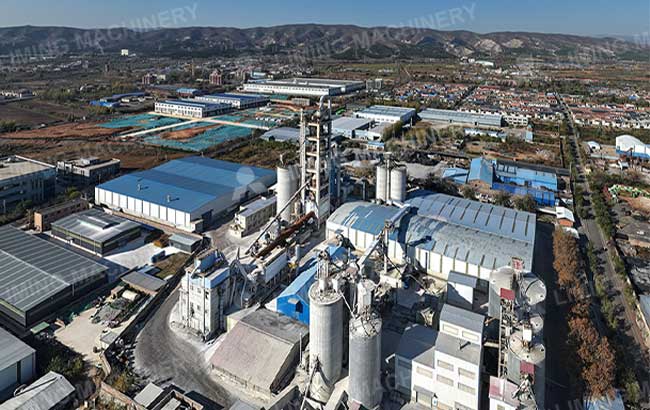
Material:Silicate
Output size:320cm²/g Capacity:1500 t/d
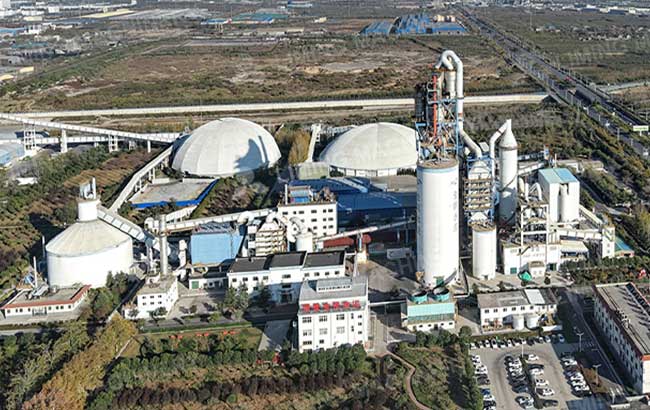
Material:coal
Output size:200 mesh, D85 Capacity:45 tph
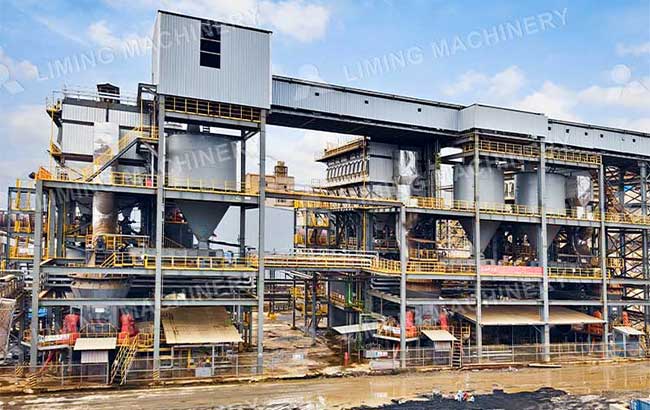
Material:Water slag, gypsum, cement fuel
Output size:400 SSa Capacity:55-60 T/H
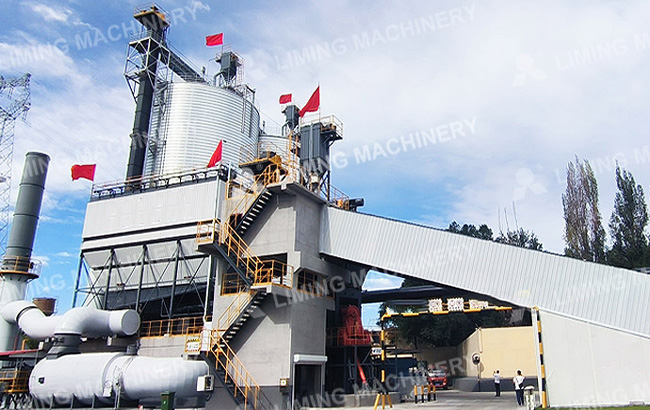
Calcination in Cement Production
Raw meal calcination is the core process in cement production, aiming to transform the uniformly blended raw meal (limestone, clay, iron ore, etc.) into clinker through high-temperature firing.
Working Principle of Calcination
First, the powdered raw meal undergoes efficient heat exchange with the
hot gases from the kiln outlet in the suspension preheater and precalciner
system. This process achieves over 85% pre-decomposition of calcium
carbonate before the material enters the kiln, significantly reducing energy
consumption.
Subsequently, the material enters the rotary kiln, where it undergoes
decomposition and solid-state reactions before final sintering in the burning
zone at approximately 1450°C. This forms cement clinker with tricalcium
silicate as the core mineral.
Finally, the incandescent clinker is rapidly cooled in the grate cooler. The
recovered hot air is recycled back into the system, while the cooled clinker
is transported to the cement grinding plant as the final product.
 申请报价
申请报价

Copyright © 黎明重工 版权所有 隐私政策
